




We are thrilled to share another update to Kaleidoscope, our web-based tool that integrates the crucial topic of Embodied Carbon into our design process. Insulation is now a separate category on the tool that allows exploration within the existing assemblies of envelopes and partitions. This addition features 17 kinds of insulation broken into several common categories, including blown, board, and batt.
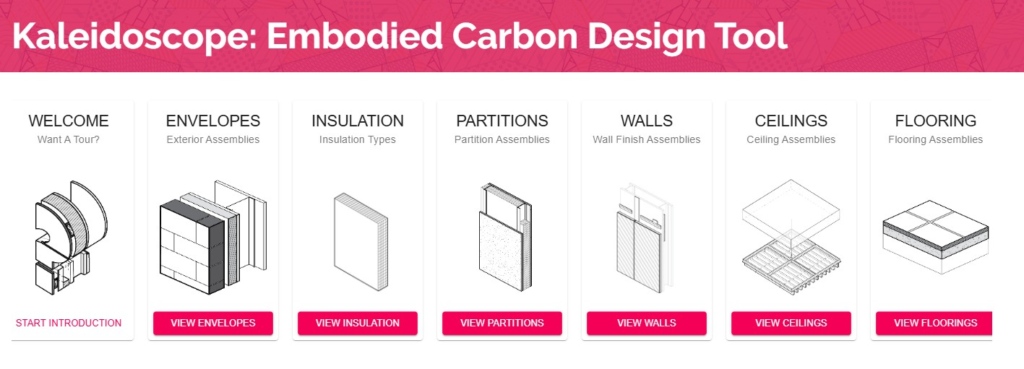
Kaleidoscope is not intended to replace but rather to supplement whole-building Life Cycle Analysis (LCA) during early design phases. It serves as a reference point for early LCA decisions, enabling designers to quickly compare the embodied carbon impacts of various standard building systems. With this update, Kaleidoscope now allows users to compare the embodied carbon of envelopes, insulation, partitions, wall finishes, ceilings, and flooring through various lenses, such as global warming potential, all life cycle impacts, material composition, and lifespan.
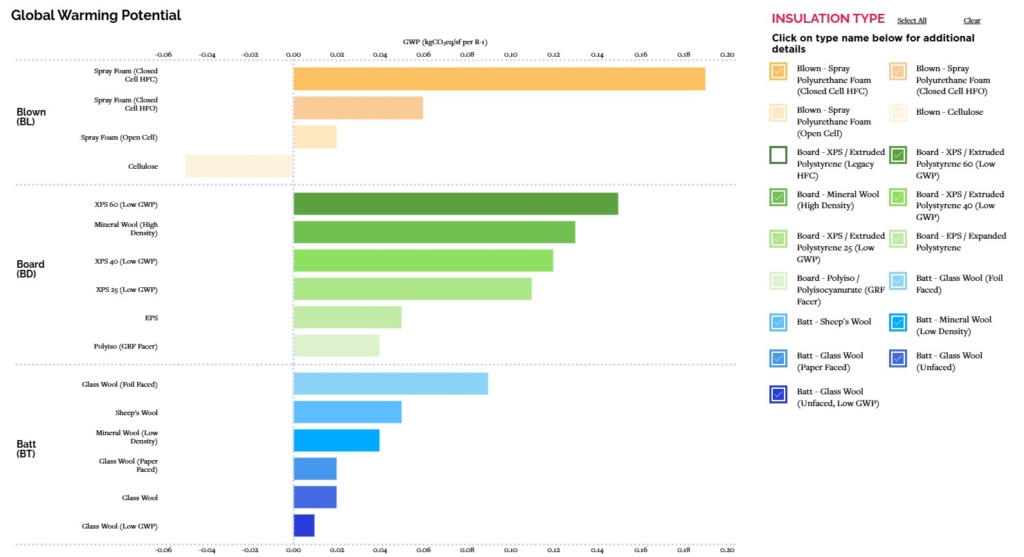
Insulation is ubiquitous in our buildings and a constant question we ask ourselves during the design process- is there a lower carbon alternative? The data is made apples-to-apples by presenting all the data with adjusted thicknesses to have the same R-value of R-1. The calculator below the graphs allows users to find the total GWP with a custom R-value or thickness. Through Kaleidoscope, we are able to quickly communicate with team members lower embodied carbon insulation options.
A few years ago, PAYETTE updated our standard project specification for roof insulation to polyisocyanurate instead of extruded polystyrene. This shift came after completing several whole-building life cycle assessments, which revealed the embodied carbon benefits of making the change. This was a catalyst for us to investigate all of the insulation types we commonly use, which then turned us into sharing this research on Kaleidoscope.
By switching to polyisocyanurate for roof assemblies, we typically reduce embodied carbon by about 1 percent in a whole-building life cycle assessment. While 1 percent may seem small, we have found that incremental improvements across many materials can add up to significant overall reductions. On one project currently in construction for John Hopkins University School of Medicine, changing the roof insulation resulted in a savings of 308 metric tons of CO2eq, which is comparable to the annual electricity use of 64 homes. We have also begun incorporating reclaimed extruded polystyrene into our below-grade specifications to further lower embodied carbon impacts.
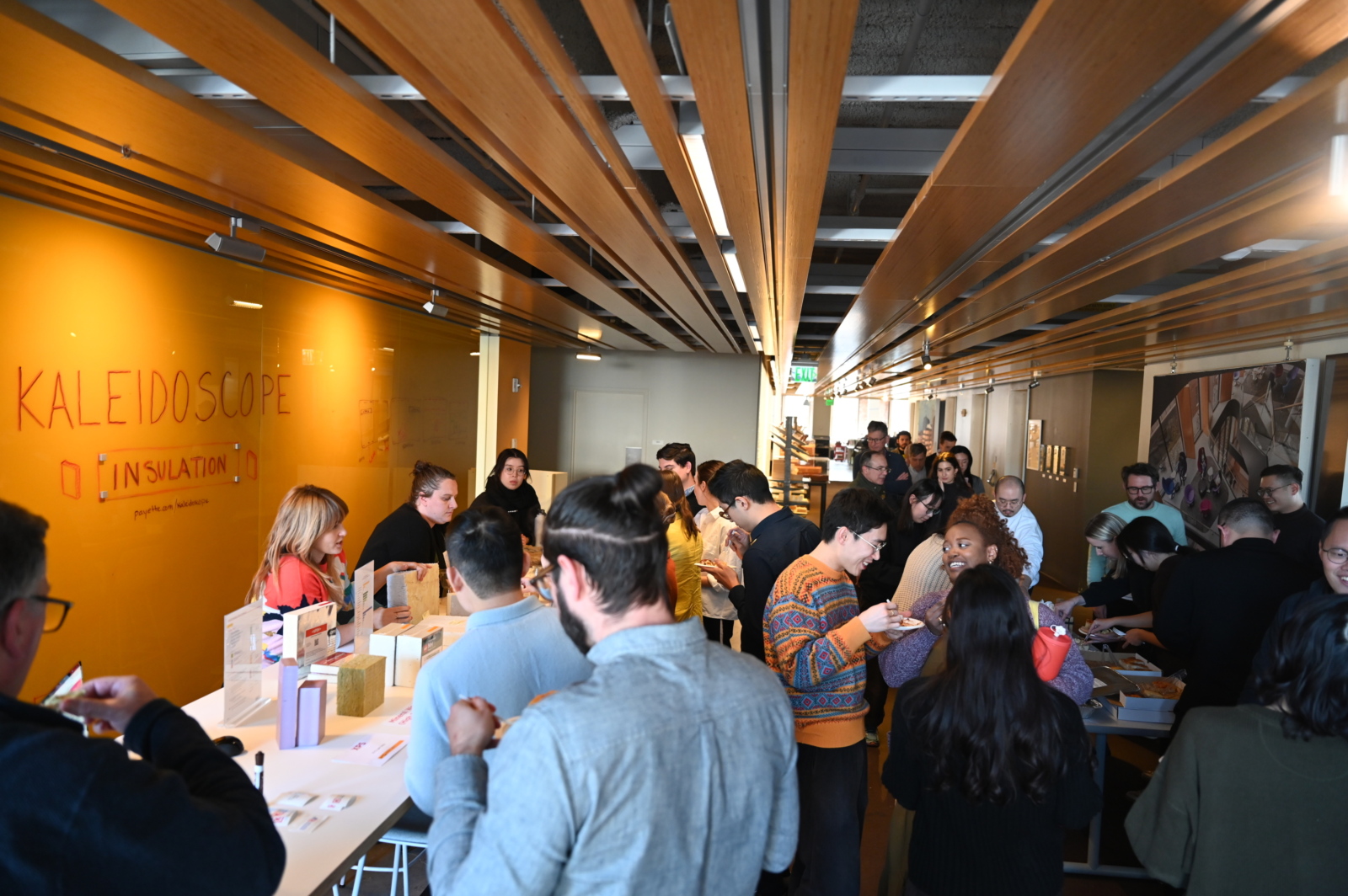
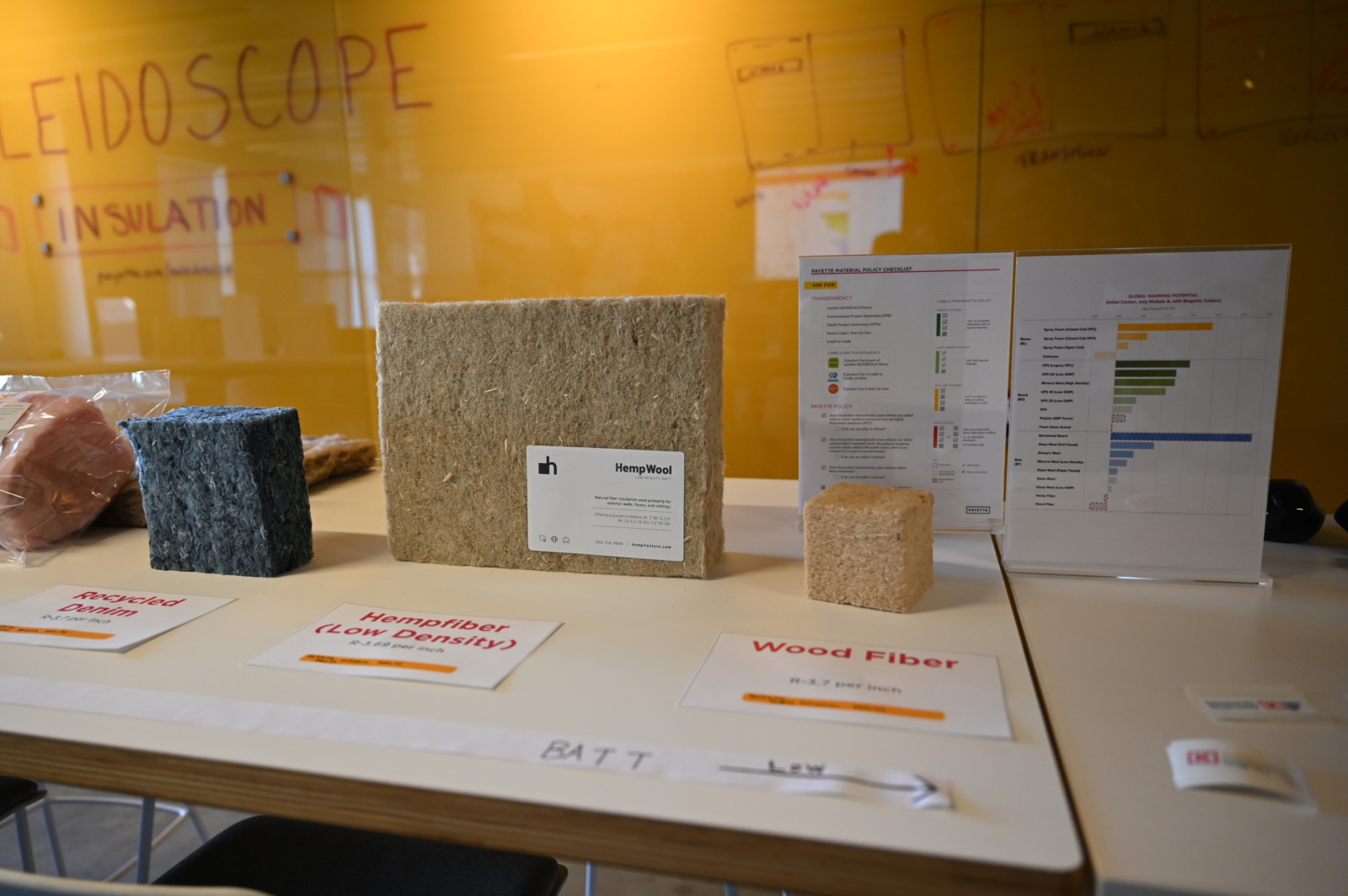
To share the research with PAYETTE people, the Kaleidoscope Research Team hosted a tradeshow/science fair style event featuring insulation-themed snacks. Samples of insulation were displayed from highest to lowest global warming potential, along with some alternative materials that are not yet included on Kaleidoscope (such as hemp, timber, and recycled denim). These alternatives are currently being evaluated for potential inclusion in the near future.
We invite you to explore the new insulation section and see how it can enhance your design process. Share your experiences using Kaleidoscope on your projects in the comments below, and if you have any suggestions or requests for additional features, please email us at tools@PAYETTE.com.
READ OUR PREVIOUS POSTS ABOUT KALEIDOSCOPE
Introducing Kaleidoscope: Embodied Carbon Design Tool
Kaleidoscope 2.0: Embodied Carbon Design Tool Updates
Kaleidoscope: New Assemblies Added!


One year of one of our most satisfying models to date-
#designalways #artofmaking #asmr #fabrication #architecturedesign