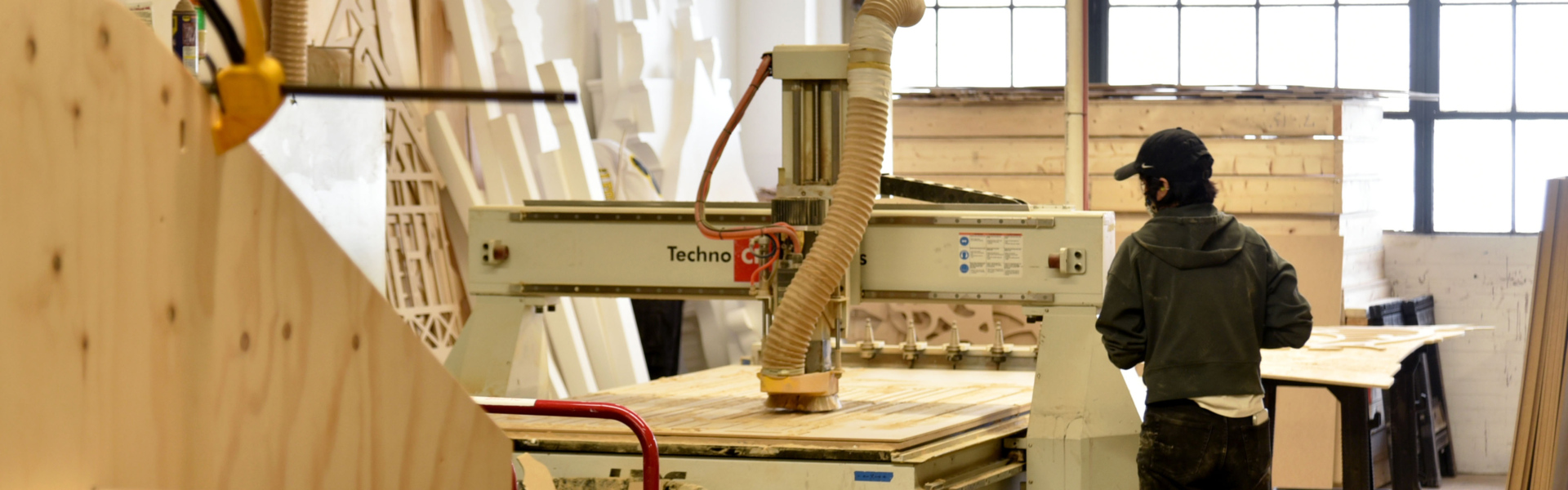



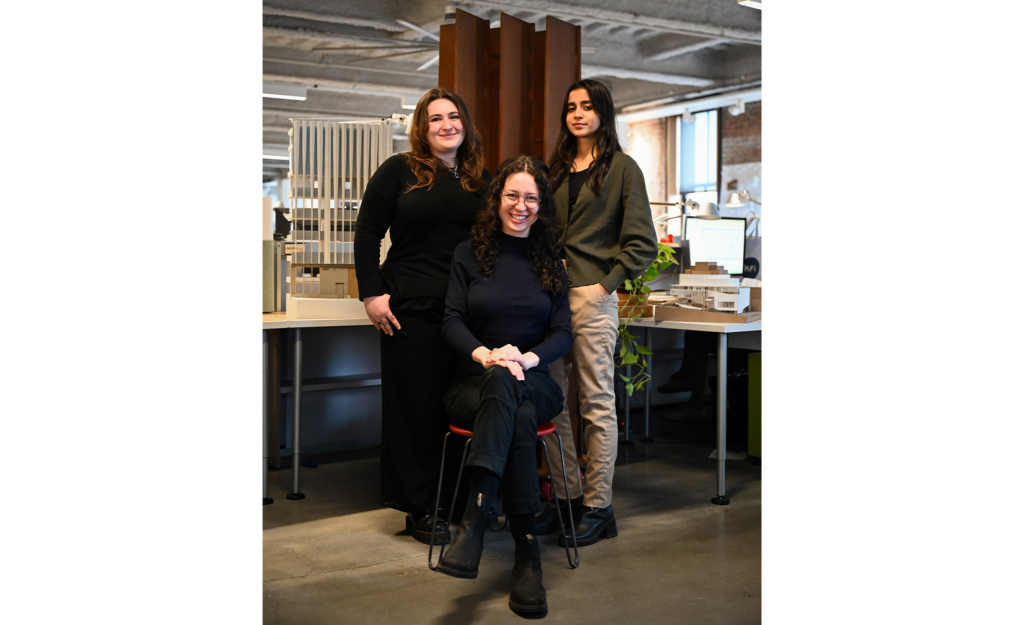
Sandrine Héroux, Sophie McKenzie, and Emily Chowdhury are each members of our in-house Fabrication team. Their day-to-day work centers on a simple question: what changes when design becomes something people can physically test?
In their care, the shop performs as a public-facing space, where teaching and collaborating with local communities and students is not kept behind professional or academic doors. Instead, design is employed through making: hands-on experiences that prove especially valuable in our hyper-digital world. These women challenge the notion of fabrication as a support service, framing it instead as an essential component of architectural authorship, a way to test ideas, share agency, and widen the boundaries of what architectural practice can include.
Together, they discuss their individual paths in architecture and reflect on their experience using fabrication as a tool for fostering shared agency, community engagement and broadening the role of the architect.

I have always been fascinated by the design process; how ideas start from an initial sketch to the creation of a built product. I imagined and built things from a young age – I remember being more interested in designing and stitching together clothes made from leaves for my toys rather than playing with them. This lifelong passion in making translated to digital fabrication early in architecture school where I simultaneously pursued both Master of Architecture and Master of Science in Architecture. My thesis focused on how architectural acoustics could generate optimized complex geometries and how to build them by casting concrete. This fabrication interest turned into a career when I moved to the United States to join PAYETTE’s fabrication team in 2020. My role here has evolved ever since; I got licensed here, was promoted to a manager role within the team, started volunteering with the Boston Society of Architects, and never stopped making.
Broadening the Role of the Architect
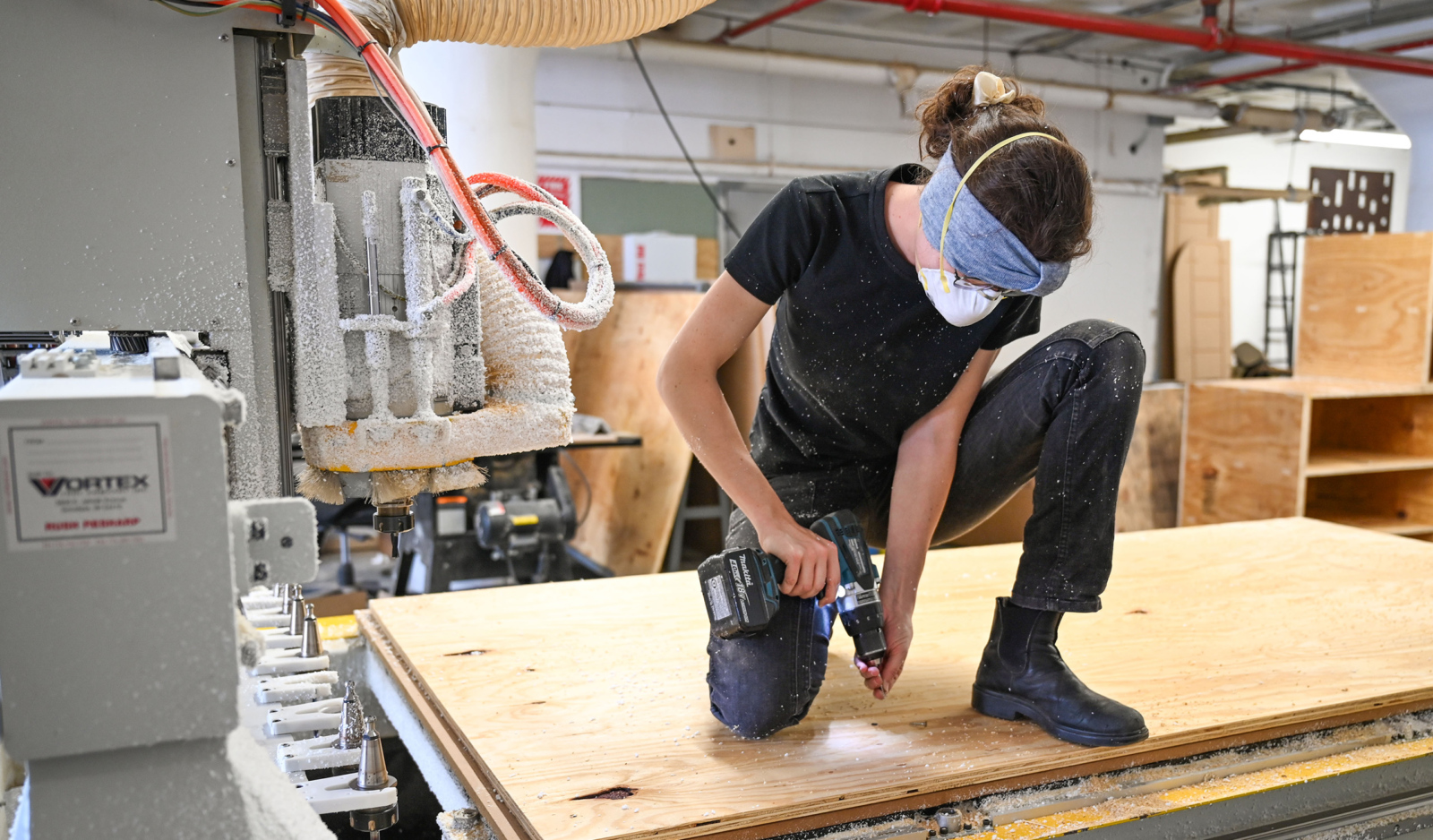
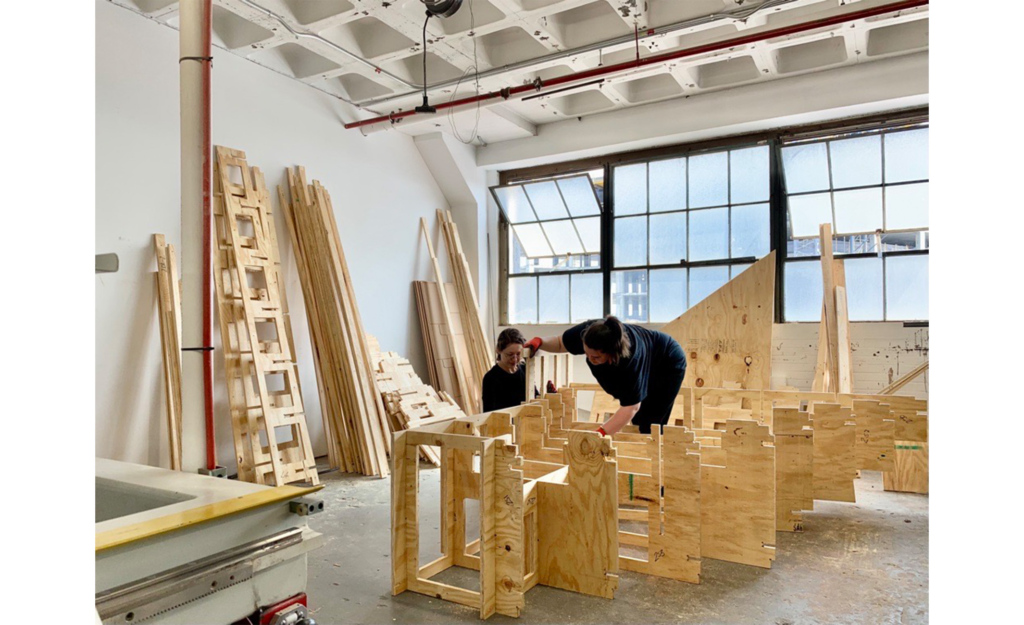
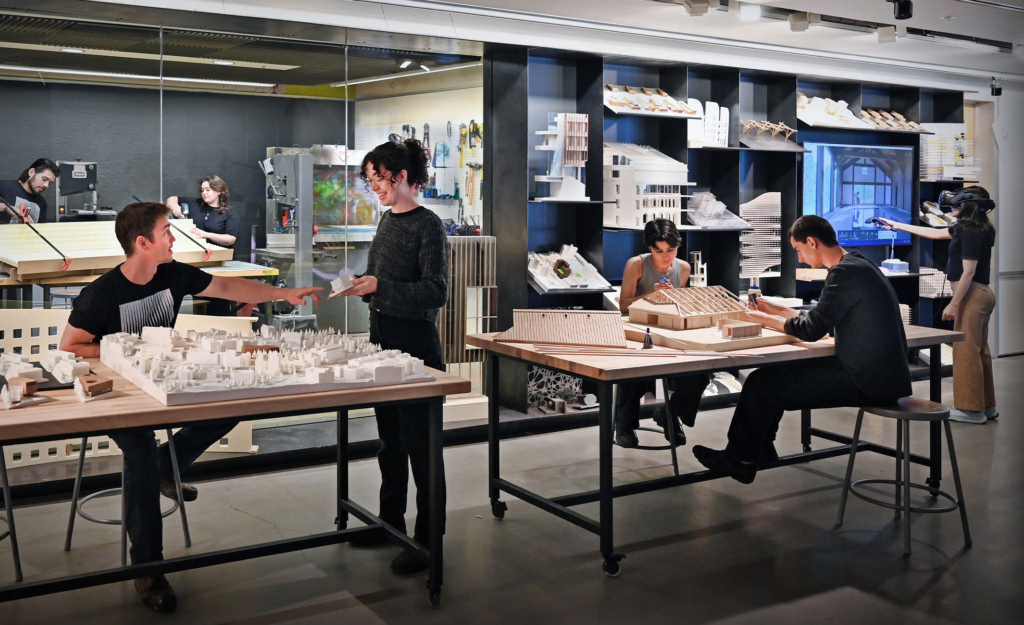
Being specialized in fabrication paradoxically broadens the traditional role of the architect. Having these dual skills of designer and fabricator means we are involved in all project phases, from early conception to the final installation. We are the ones drawing and the ones building. By operating machines and tools ourselves, we gained a deep understanding of their capabilities and how we can push their limits to solve complex problems with innovative solutions.
This way of thinking transforms the way we design, and allows us to be involved and have complete control throughout the entire process. There is a sense of fulfillment—and relief—when the pieces you drew and fabricated connect seamlessly together, blending in perfectly with the existing conditions. I feel privileged to work both in a shop and an office setting. There is freedom in knowing you are able to fully execute a project in-house and on your own.
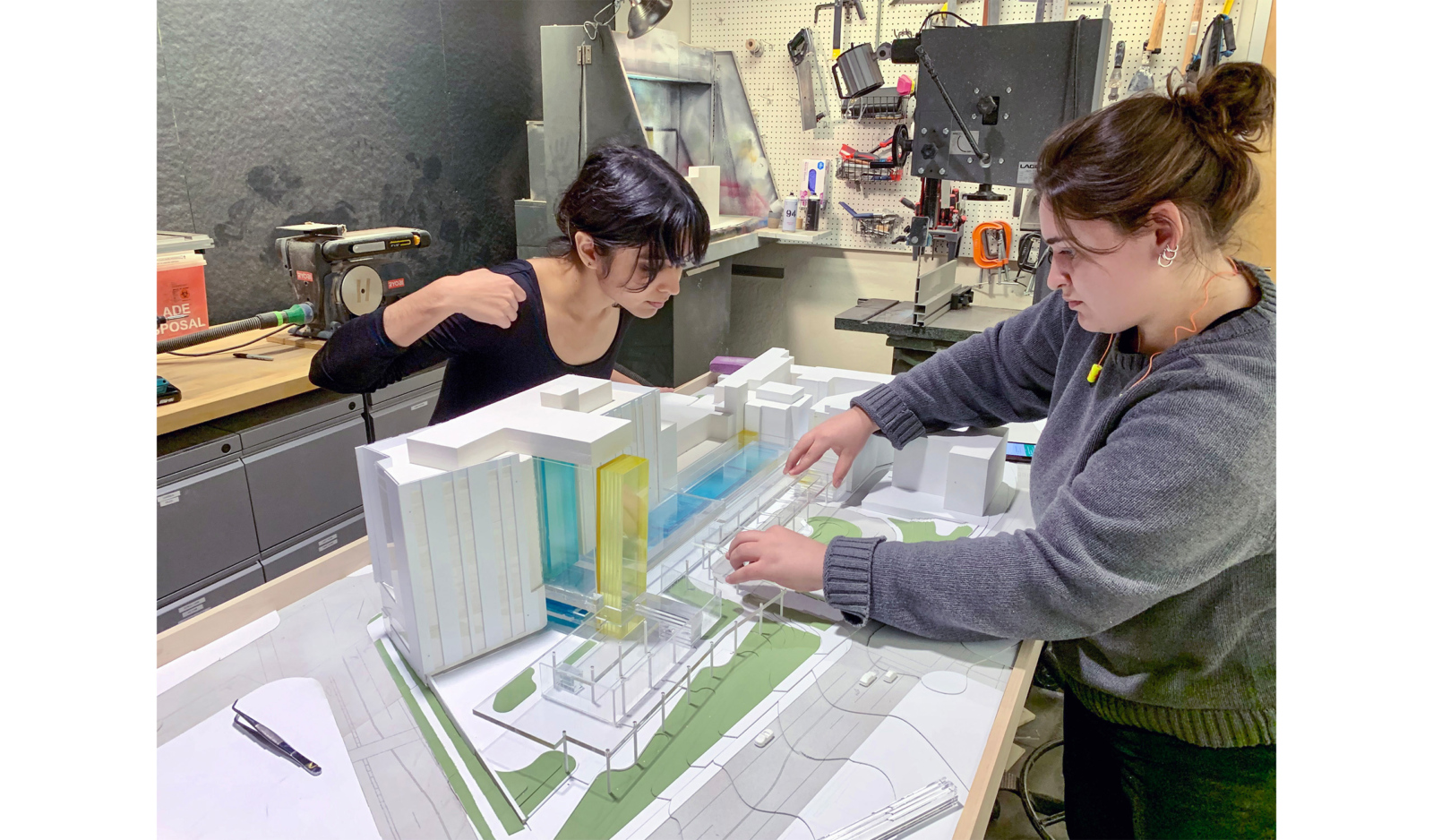
Every week is different for us. We work on a variety of designs, from schematic models for client presentations to exhibition quality models of existing projects, furniture pieces and full-scale mockups. One recent project I led is the embodiment of this broad and deep role we take on. The Sho-Ping Chin legacy exhibition is a collaborative effort across the PAYETTE team that highlights our collective capabilities and impact, both as designers and as fabricators.

Sophie McKenzie
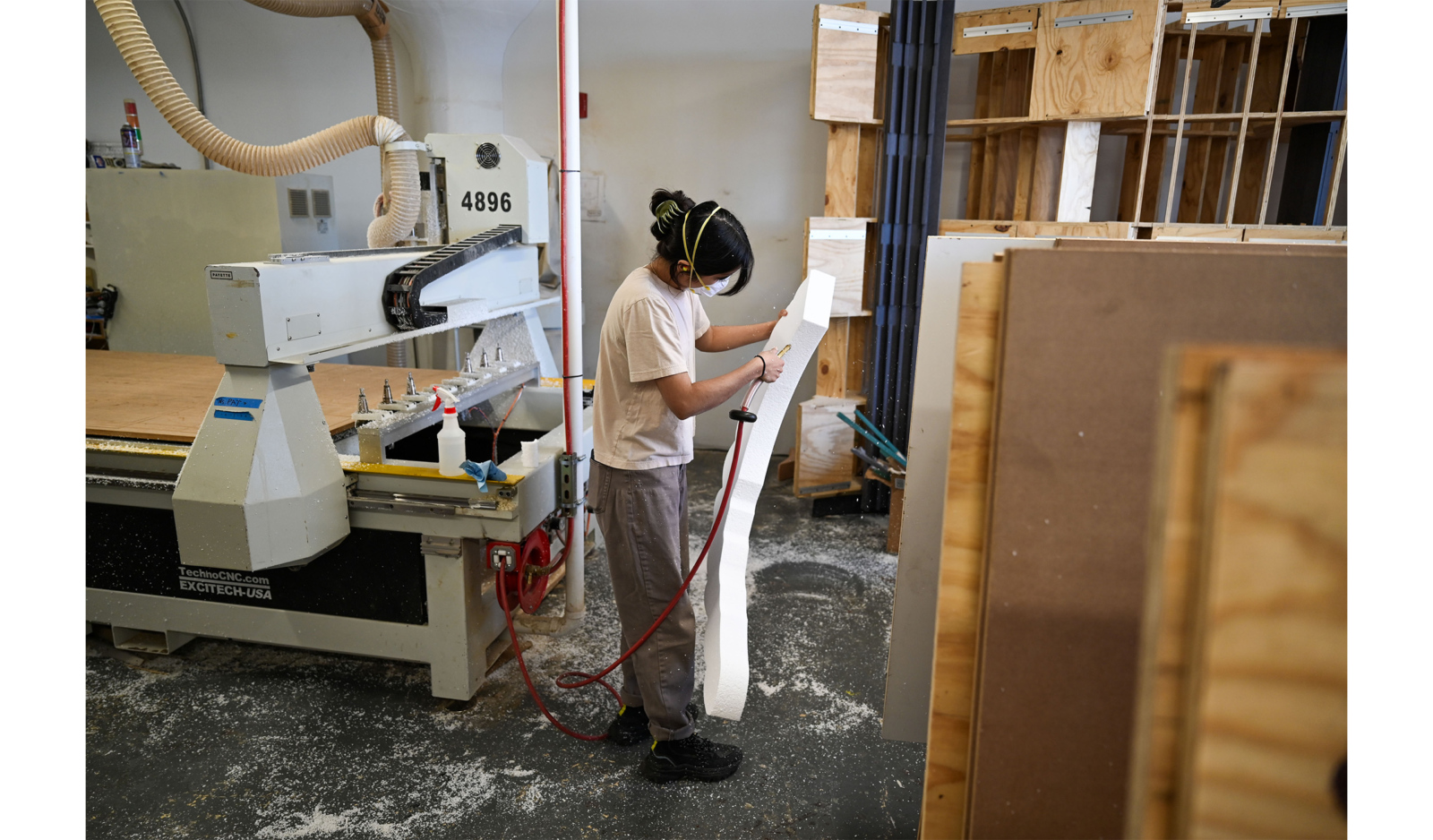
Working with my hands is how I’ve always enjoyed expressing myself—when I was younger, I focused on ceramics, taking and developing film photography, baking, and cooking. Alongside my passions in art, I excelled in STEM, which led me to choose architecture as a career path. I attended Wentworth Institute of Technology for their great co-op program and the receive both a bachelor’s and master’s degree in one five-year program. I loved studio culture, and the satisfaction of working alongside my peers to reach shared goals. However, my first co-op experience quickly helped me realize I would not be content with a typical designer role; I considered leaving architecture school because of this. Shortly after this co-op, I started to spend significant time in the shops and CNC’d my first site model. This is when I realized fabrication was an avenue I wanted to pursue. I focused the rest of my time at WIT taking courses that took advantage of the shop, and ended my studies with a fabrication-focused thesis about placemaking in Boston.
After graduating, I was strictly applying to shop positions for furniture design and similar avenues. My thesis advisor told me about the designer/fabricator position opening at PAYETTE—which ended up being the only architecture firm I applied to. I joined in the summer of 2022, and feel so lucky to have continued learning and growing here.
Fostering Shared Agency
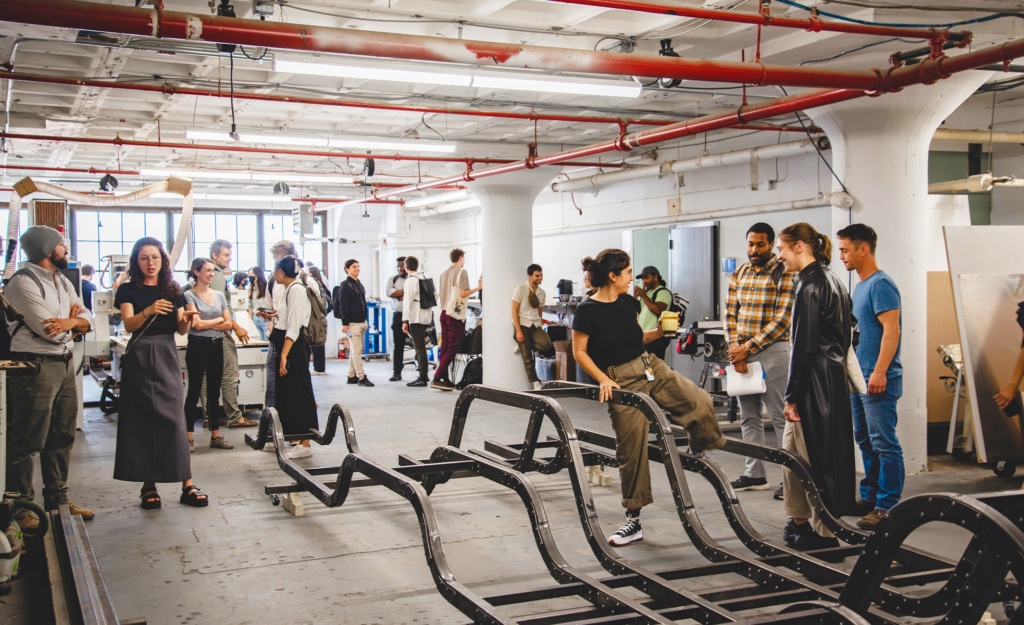
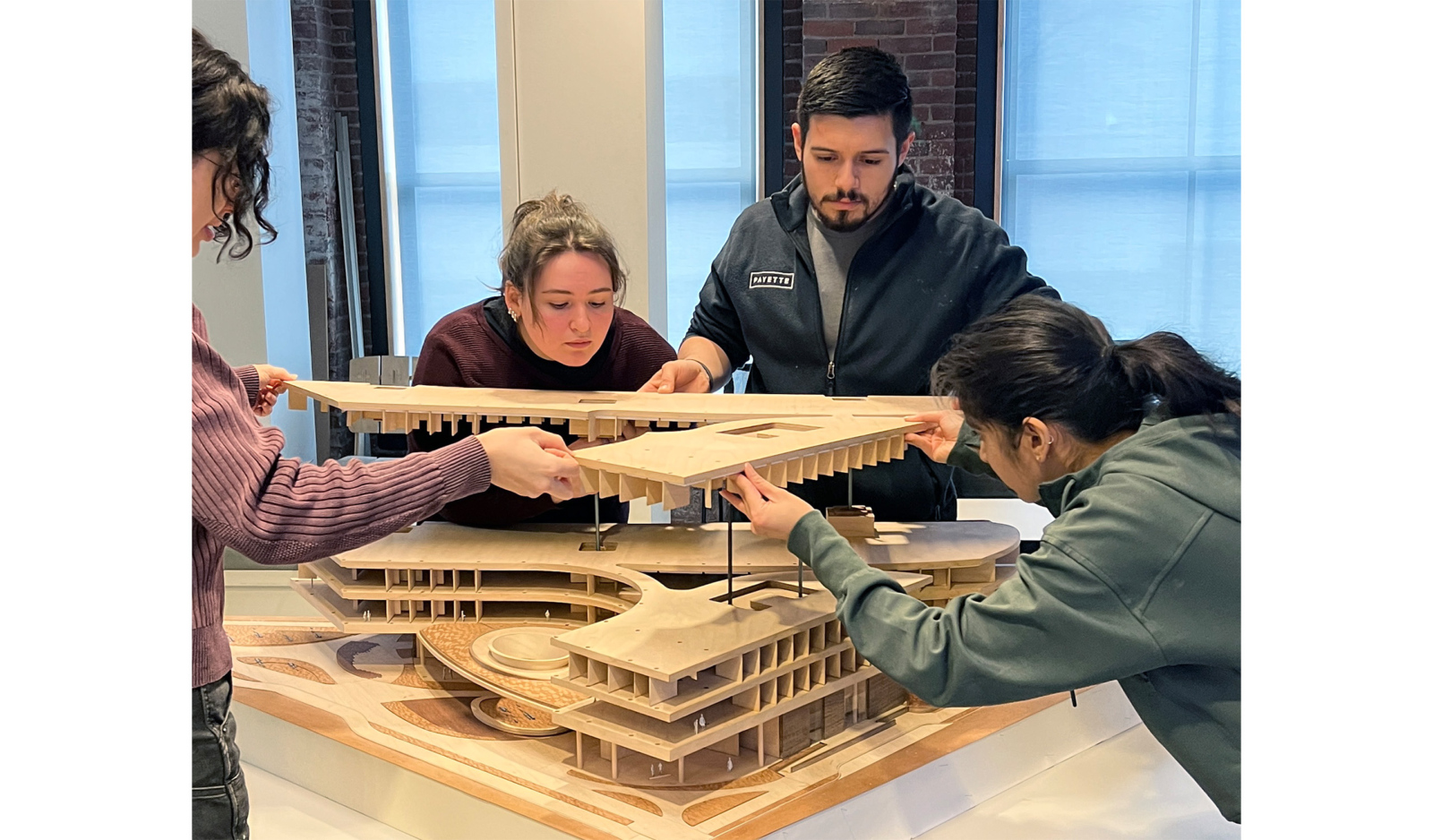
Agency and accessibility in design, in both the delivered architecture and the artifacts we produce and edit along the way, are fundamental to the practice. We as designers have the responsibility of communicating design ideas as clearly as possible to our clients and users. Engaging stakeholder groups proves most effective with the involvement of models and mock-ups as accessible means for communication–since not everyone can read a plan, dissect architectural jargon, or imagine a space realistically using VR. Using tangible objects as working tools invites an interpretation of scale, space, and materiality that our collaborators can physically experience.
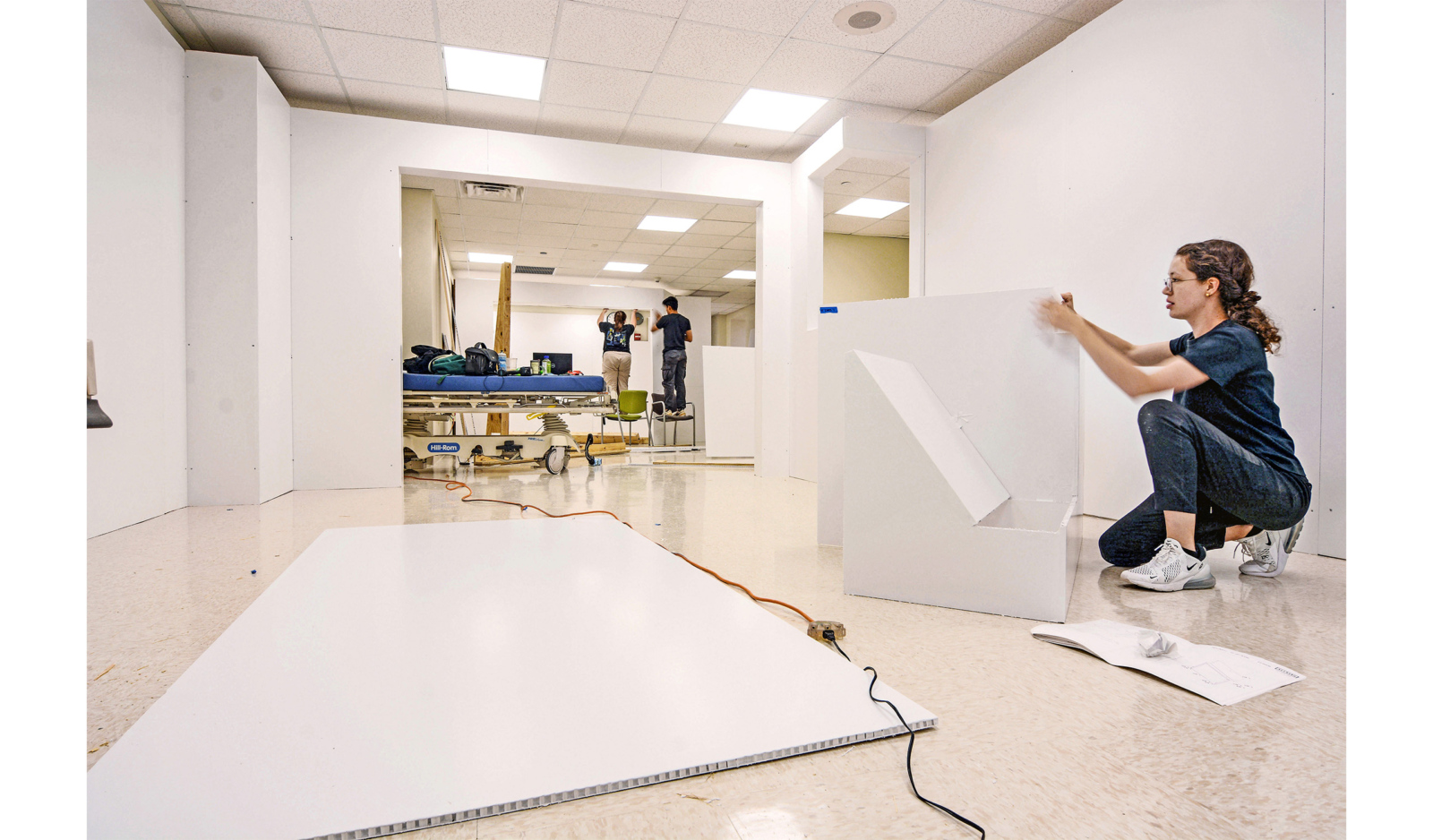
In my role at PAYETTE, I’ve had the opportunity to be involved in a variety of projects that use models and mockups as working tools for stakeholder input in our projects. Most notably, the full-scale patient rooms we’ve mocked up for our healthcare clients have allowed user groups to simulate common patient experiences and provide feedback to us. We use these comments to make design changes and edit the mock-up – creating a physical feedback loop where our clients and user groups have design agency.
Emily Chowdhury
I grew up watching my parents cook a lot. My dad was a chef and my mom always fed us homecooked meals. Whether it’s through a home or restaurant kitchen, they were always working with their hands to provide for our family. Their method of cooking, plating, and delivering was a process. I grew to appreciate processes, finding value in every part. As I got older, I had a knack for fixing small things around the house or figuring out how things worked—translating to problem-solving and troubleshooting.
I enjoyed art and was involved with STEM courses in high school and (like Sophie) I narrowed my search to design, specifically architecture. I pivoted towards WIT’s Center for Applied Research (now known as School of Architecture & Design) labs, where I became a fabrication lab mentor/monitor and quickly became a familiar and reliable face in the architecture department. After finishing my master’s degree, I took a role as a designer and educator at the nonprofit YouthBuild Boston (YBB) whose mission is to provide for underserved communities of color, particularly for youth interested in the construction and design industries. As a young woman of color in design, it was clear how important representation and diversity is in our industries, especially for young people.
Serving Our Community
Serving the community deepens our practice, expands our thinking and at times, results in our most impactful work. Giving back is essential to our society—providing agency to explore and create with access to resources and tools. We take initiative to expose people to architecture and design at different stages of life.
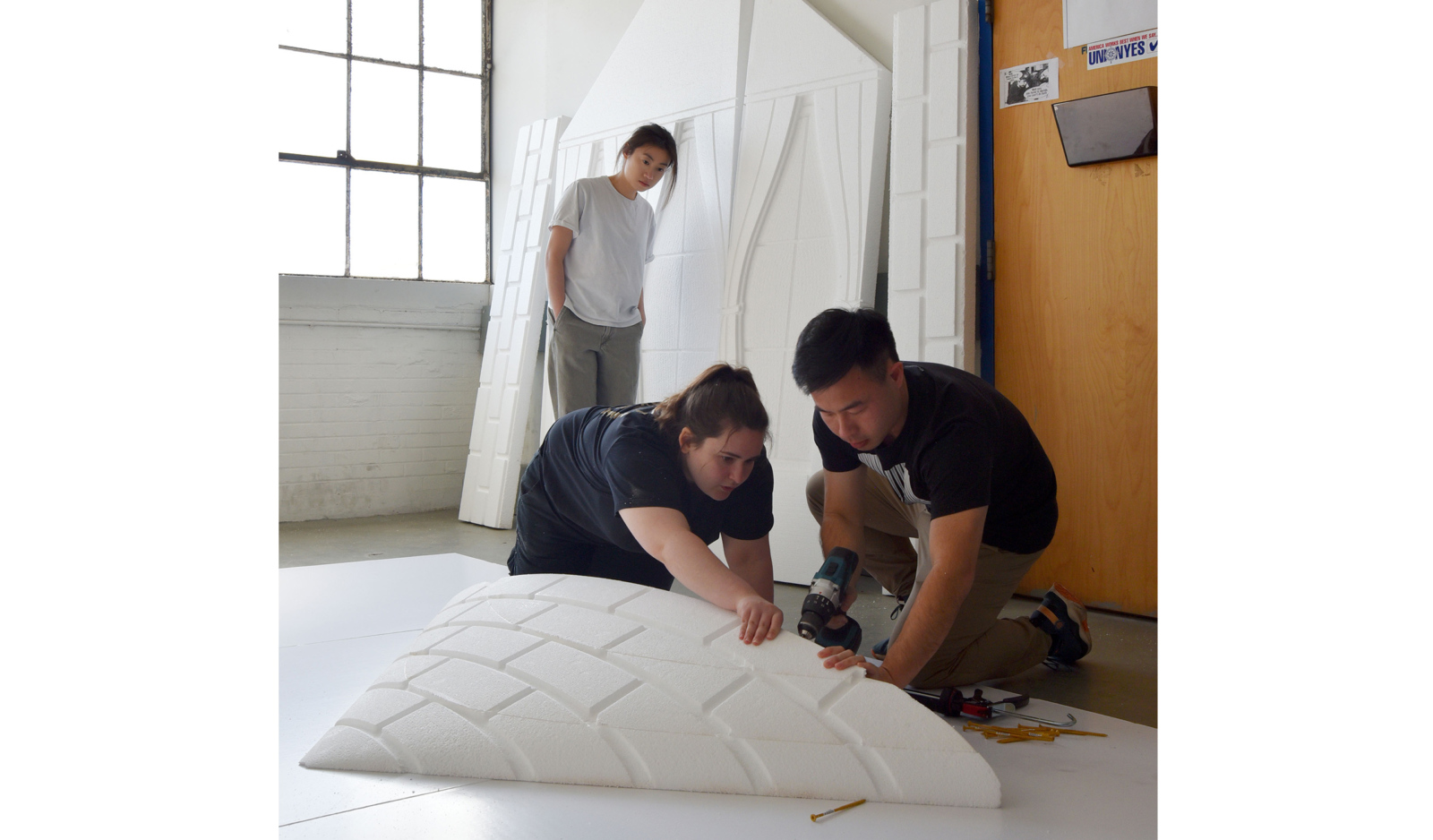
While our project work keeps us busy throughout the calendar year, we intentionally make time to serve different initiatives. For Martin Luther King Jr. Day, we partner annually with local schools and nonprofit communities to provide design services and solutions for their current needs. To expose youth to design even sooner than high school, we’ve developed a relationship with the theater department at Boston Public Schools. At times, our work is set as a backdrops and props for musicals put on by the theater department.
PAYETTE also hosts crash courses in the summer for Boston Public high school students to introduce design thinking and potential pathways in construction and design. Showing them why their voices matter and how impactful it can be is a valuable lesson in their adolescence.
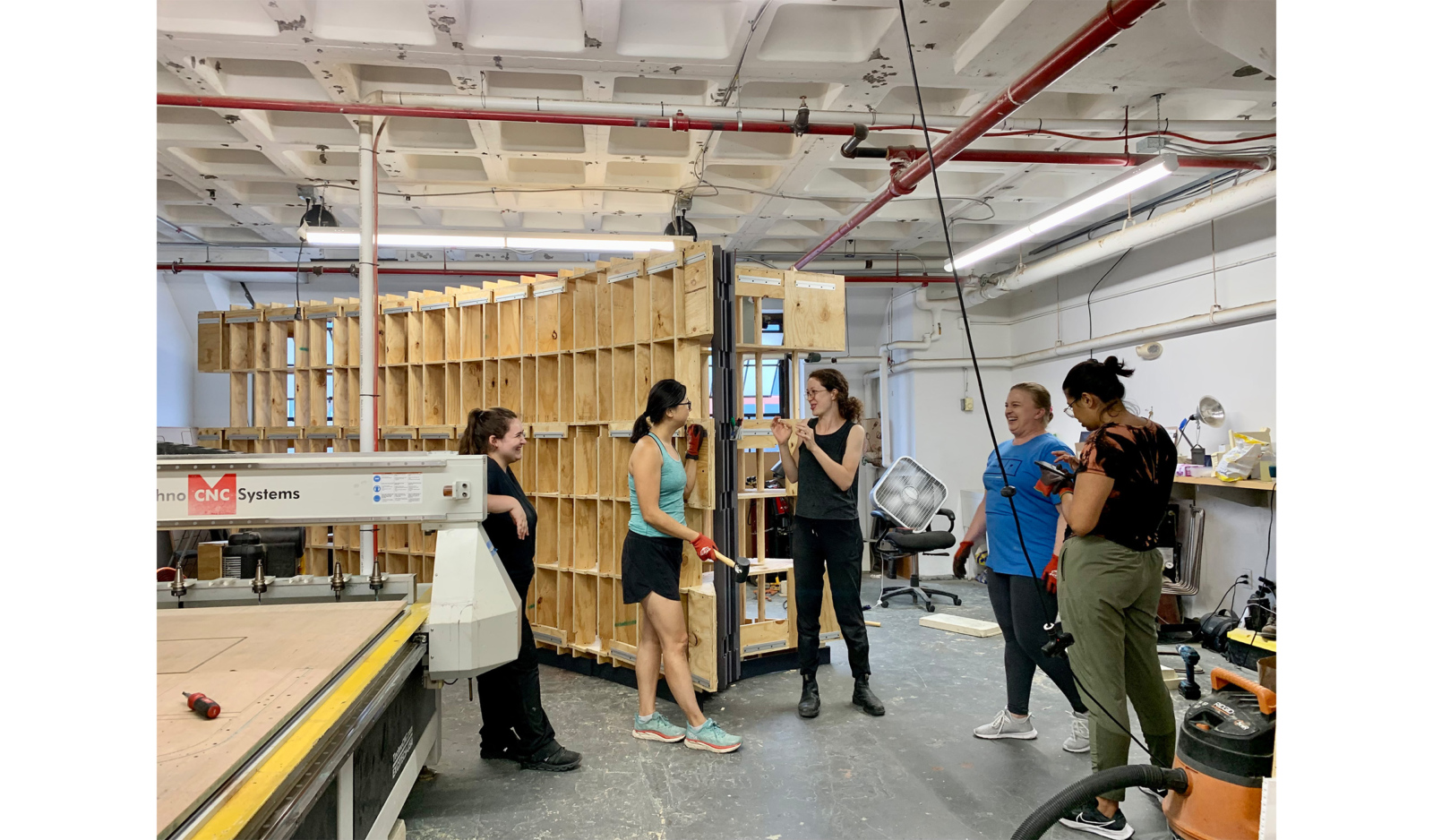
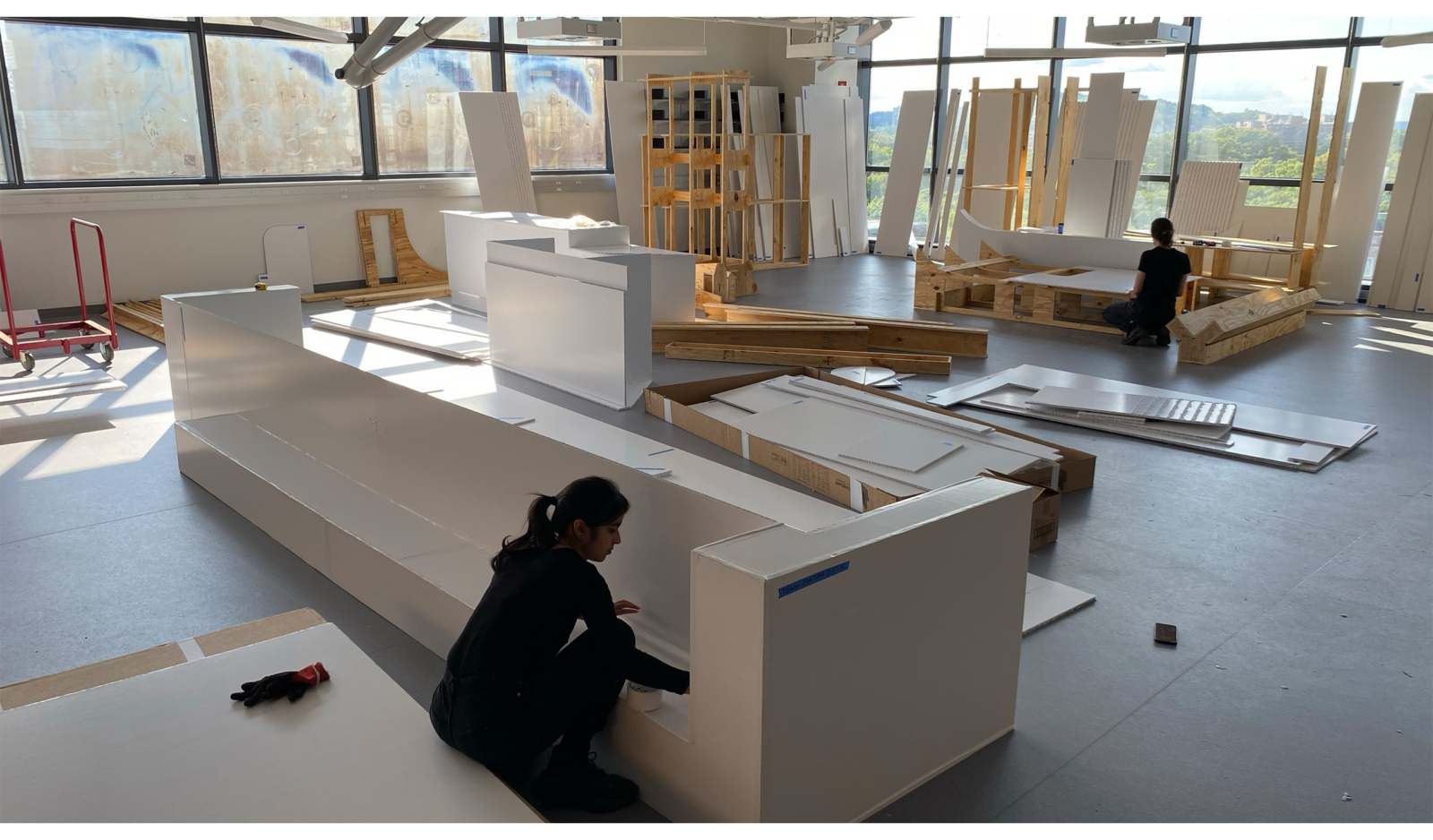
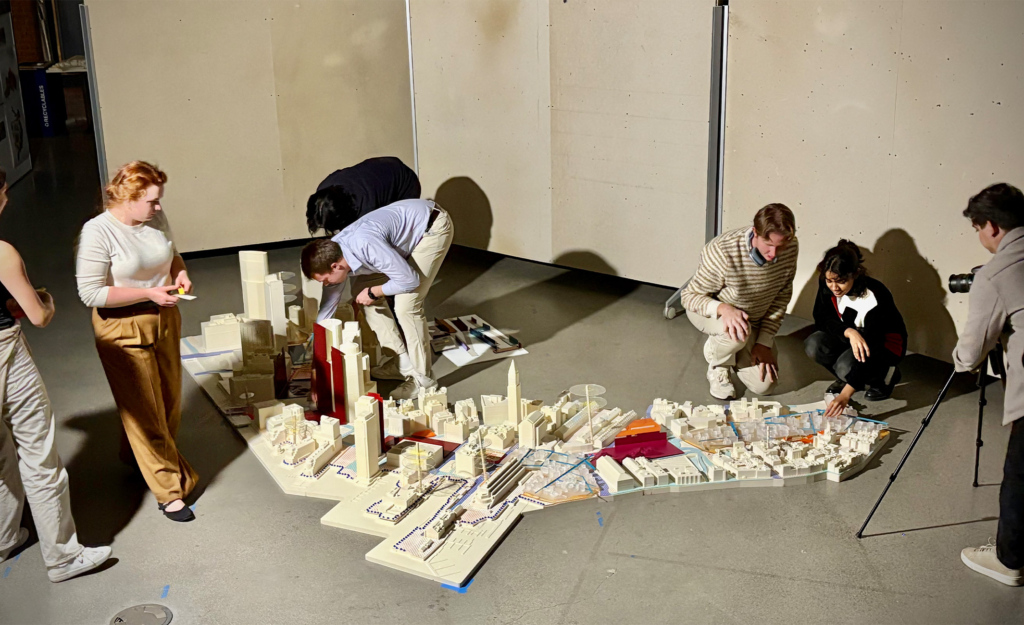
Every fall, PAYETTE holds a studio course called “OpenLAB Boston” for Virginia Tech School of Architecture students, an immersive studio where they explore and synthesize the many facets of architectural practice, including fabrication. Through hands-on model making and mock-ups at multiple scales, I mentor students throughout the semester, guiding their use of digital fabrication tools and reinforcing how the act of making accelerates their understanding of architecture.


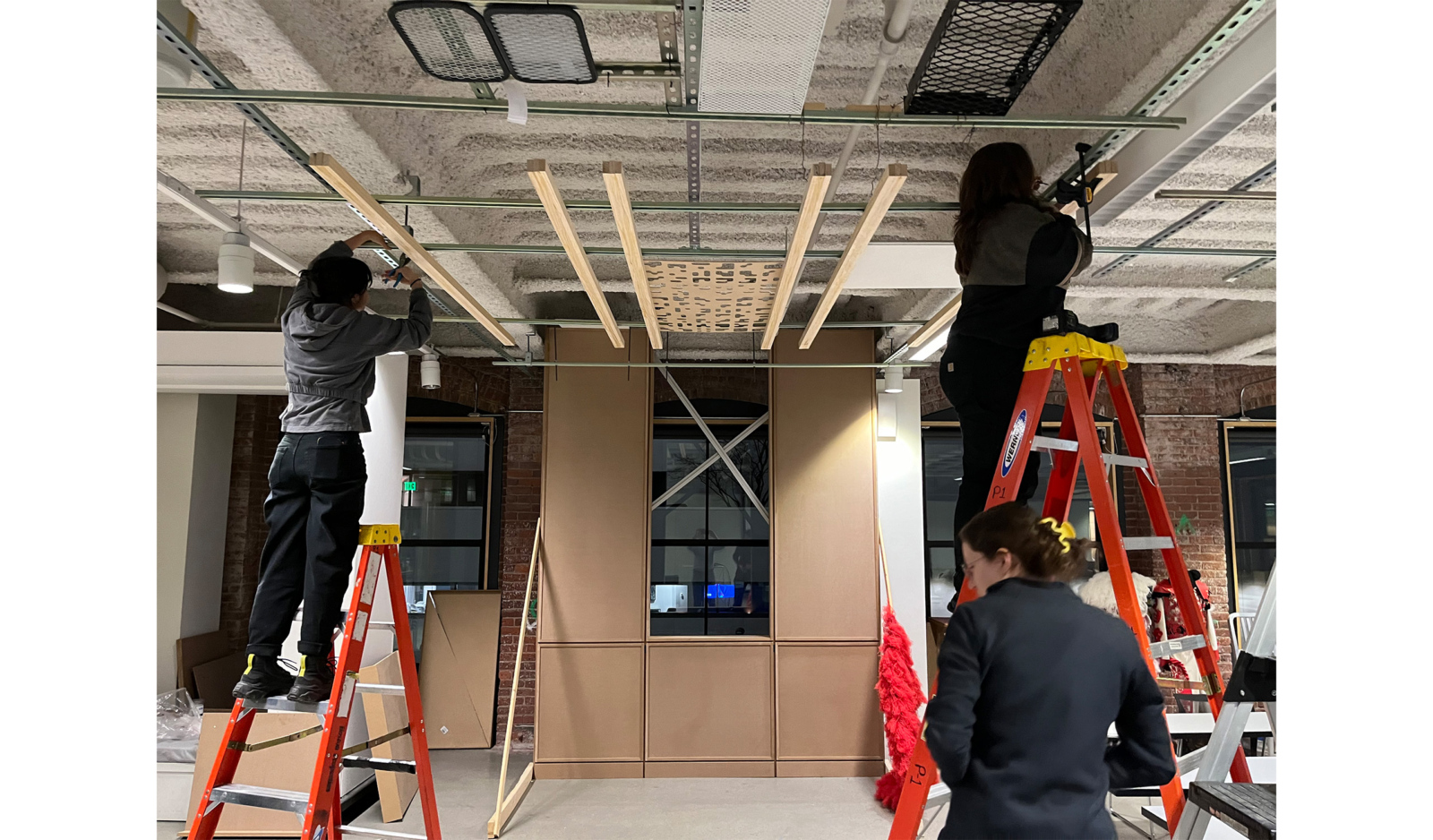
From milling to installation: a new feature wall for Breaktime.
This branded feature wall is the first installment of our work for the Breaktime Hub, a resource center in downtown Boston where young adults experiencing housing insecurity can access health services, job training, basic necessities, and shelter.
The custom-milled MDF panels echo Breaktime’s logo while doubling as ledges for photos and personal objects. We’re thrilled to continue our work with Breaktime and look forward to the next installment of custom architectural furniture for the Hub.
#designalways #fabrication #artofmaking #boston #architecture