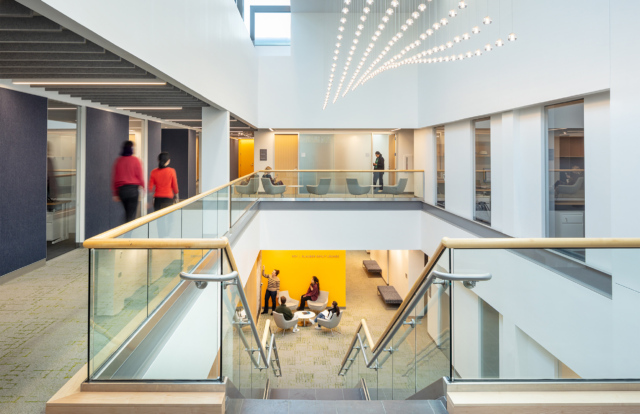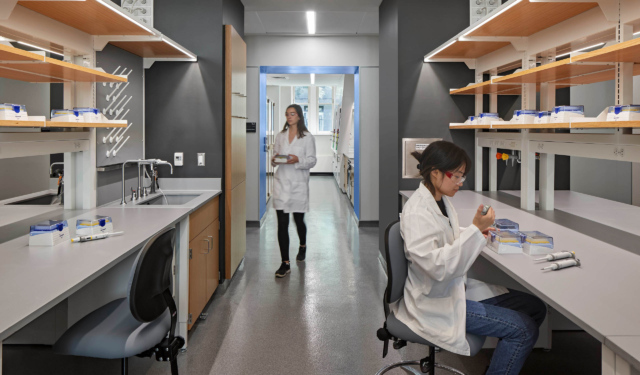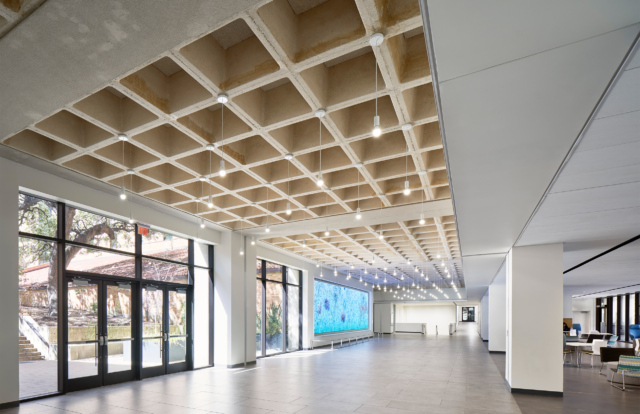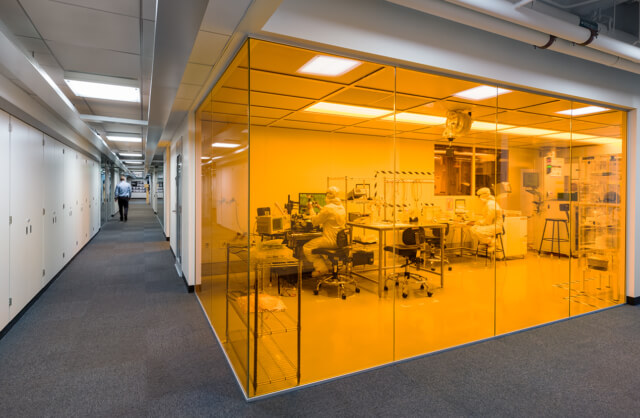
At Harvard Medical School, PAYETTE has been engaged in a strategic planning role and has implemented multiple projects over the past five years in the University’s historic central core campus. In a series of projects over the past five years for the West Quad Initiative, a step function renovation of a series of interrelated/phased labs within Harvard’s historic quad buildings. The renovations include a series of diverse projects including biomedical and biochemistry research labs, gross anatomy labs and their associated morgue, vivaria, specialized gnotobiotic animal care spaces, aquatics and the Life Lab, a newly created incubator space to support the Therapeutics Imitative and Entrepreneurship program at HMS.
Harvard Medical School
West Quad Initiative
Project Statistics
LOCATION
Cambridge, MA / United States
IMPLEMENTATION PROJECTS
- Biomedical Research Programming/Implementation, SGM-3-6: 50,000 SF
- Multi Species Animal Research Spaces: 23,000 SF
- Blavatnik Harvard Life Lab Programming/Renovation: 12,315 SF
- Josefina del Marmol Biomedical Research Lab Programming/Renovation, Building C-2: 7,800 SF
- Gross Anatomy Lab Programming/Renovation: 6,850 SF
- Morgue and Teaching Lab Programming/Renovation: 3,650 SF
program components
Biomedical Research Laboratories, Cell Biology, Biochemistry, Molecular Pharmacology, Neurobiology, Gross Anatomy & Morgue, Vivaria, Gnotobiotics, Aquatics
TEAM
Jeffery DeGregorio
Principal-in-Charge
Sara Gewurz
Project Manager
Chris Stansfield
Architect
Sean Hurley
Architect
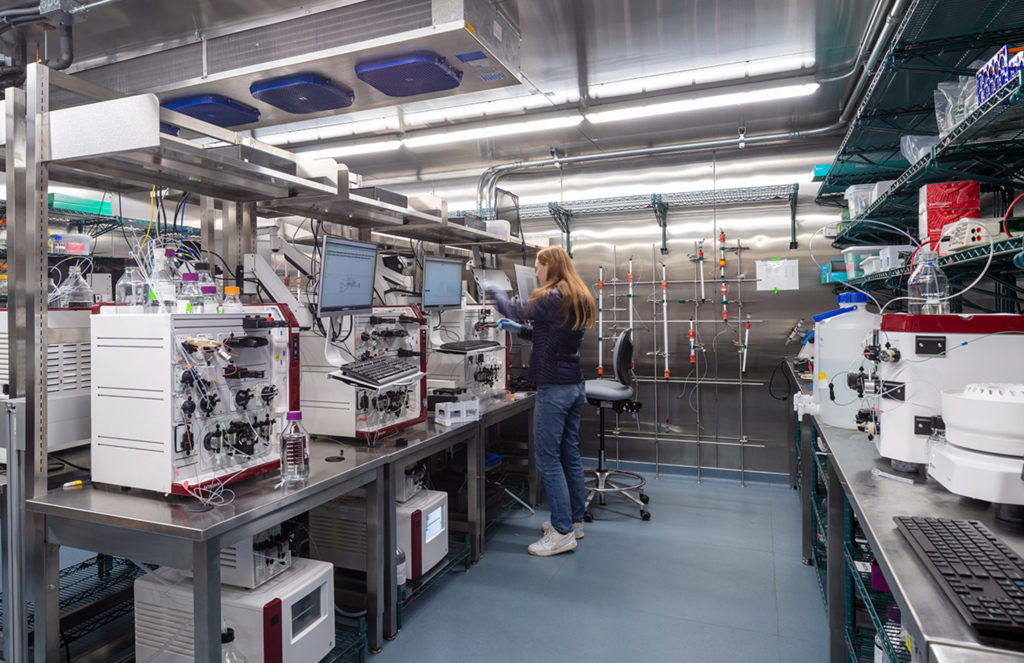
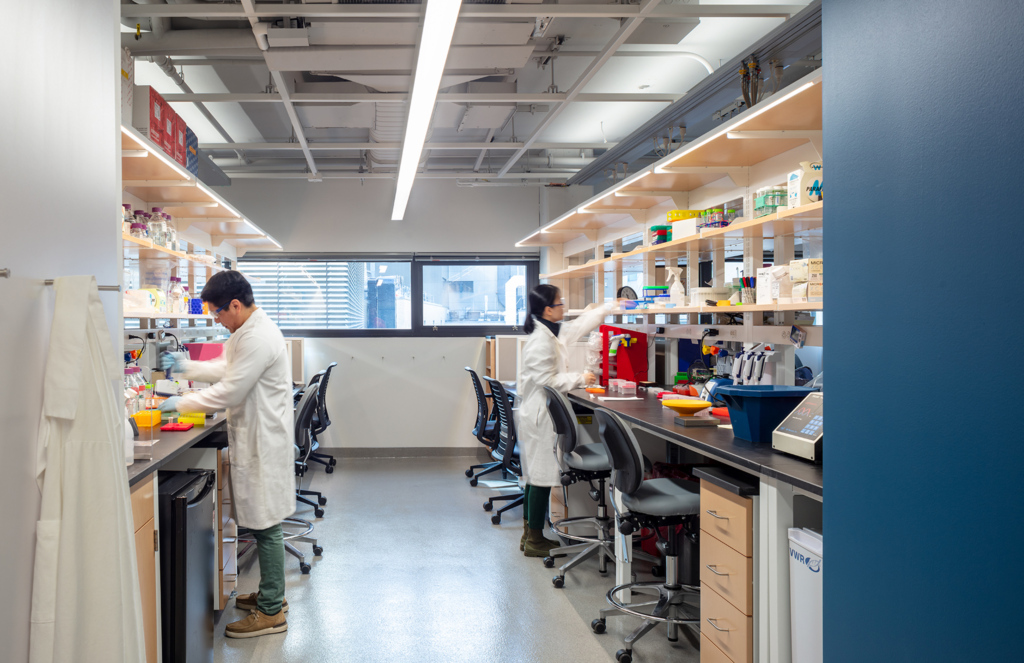
biomedical research labs: multi-phase planning, Programming & Renovation
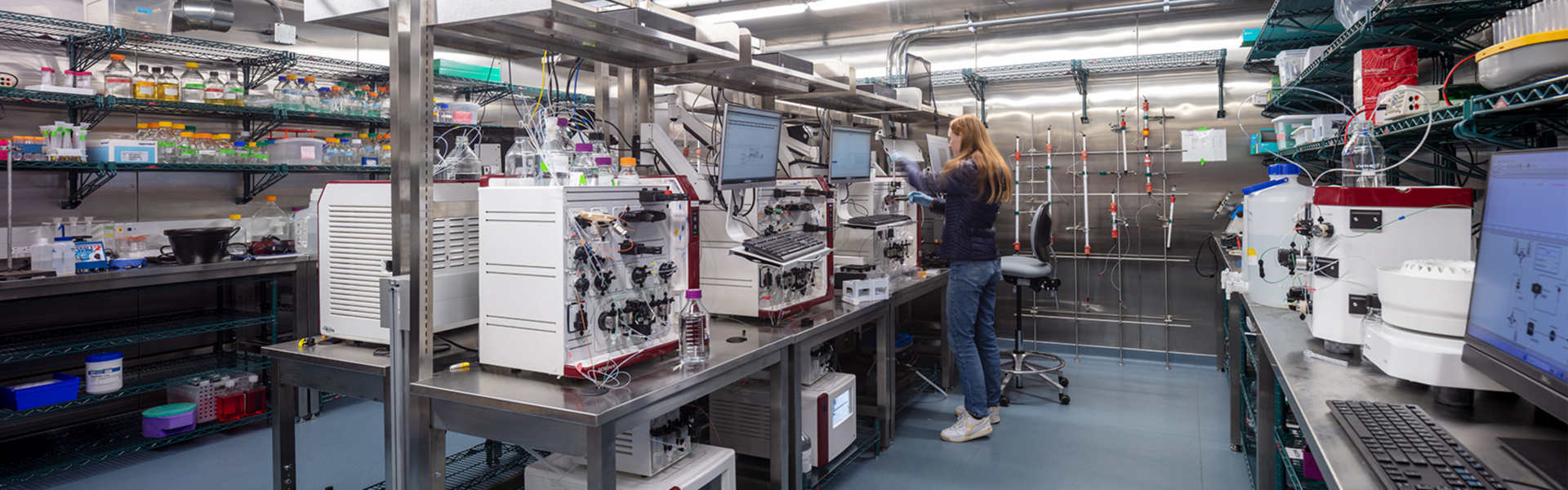
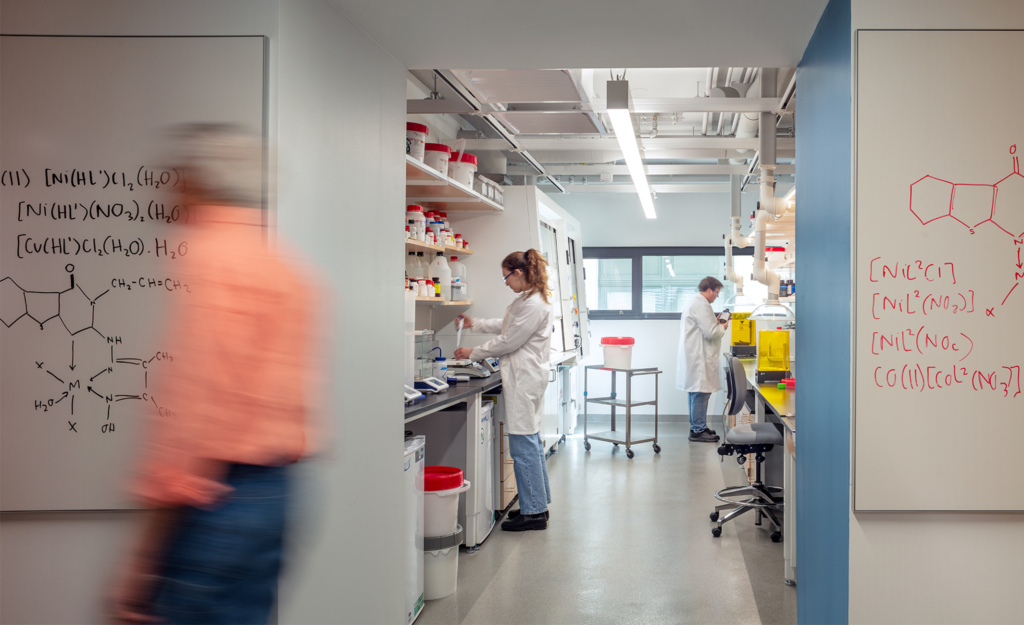
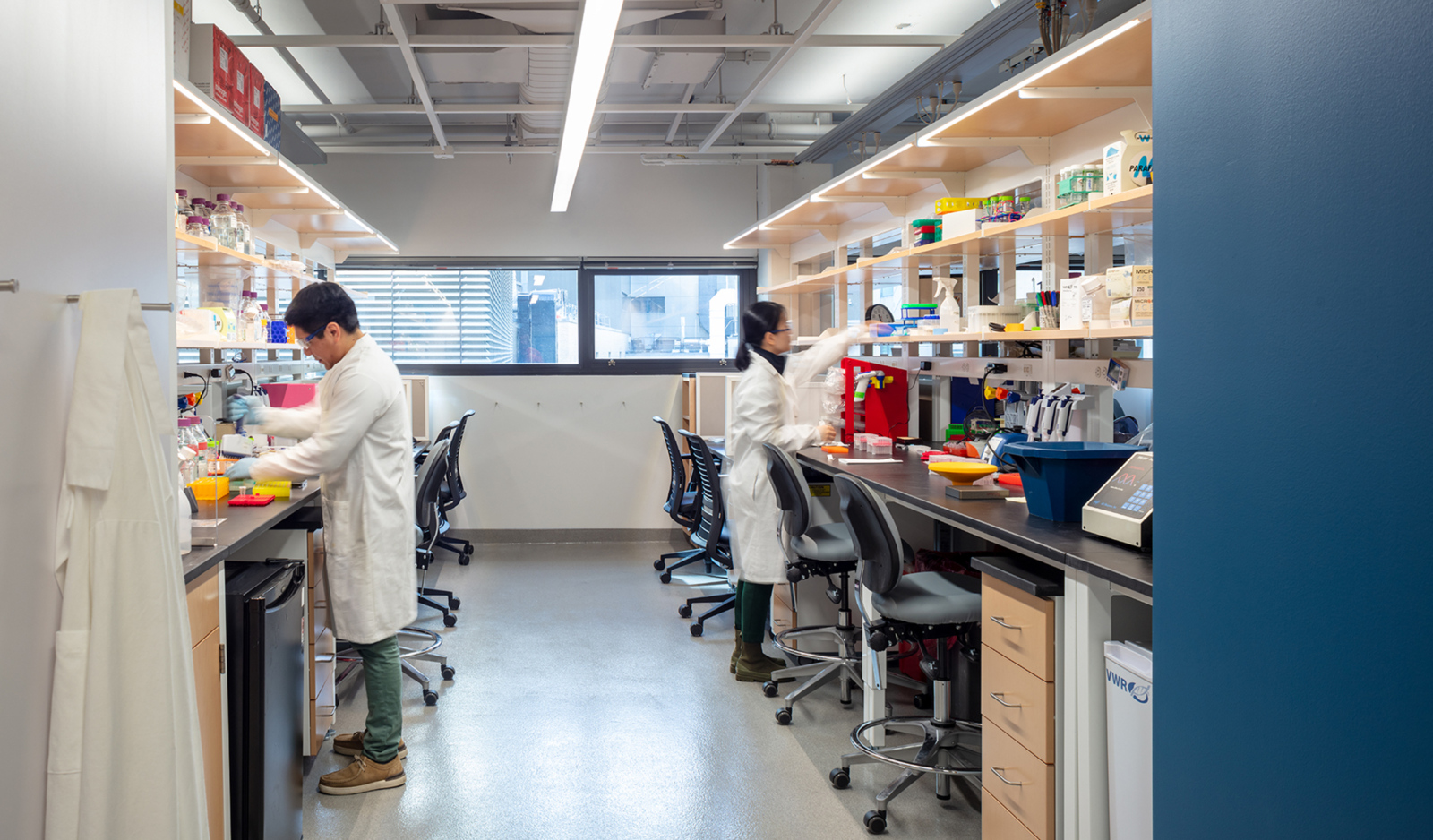
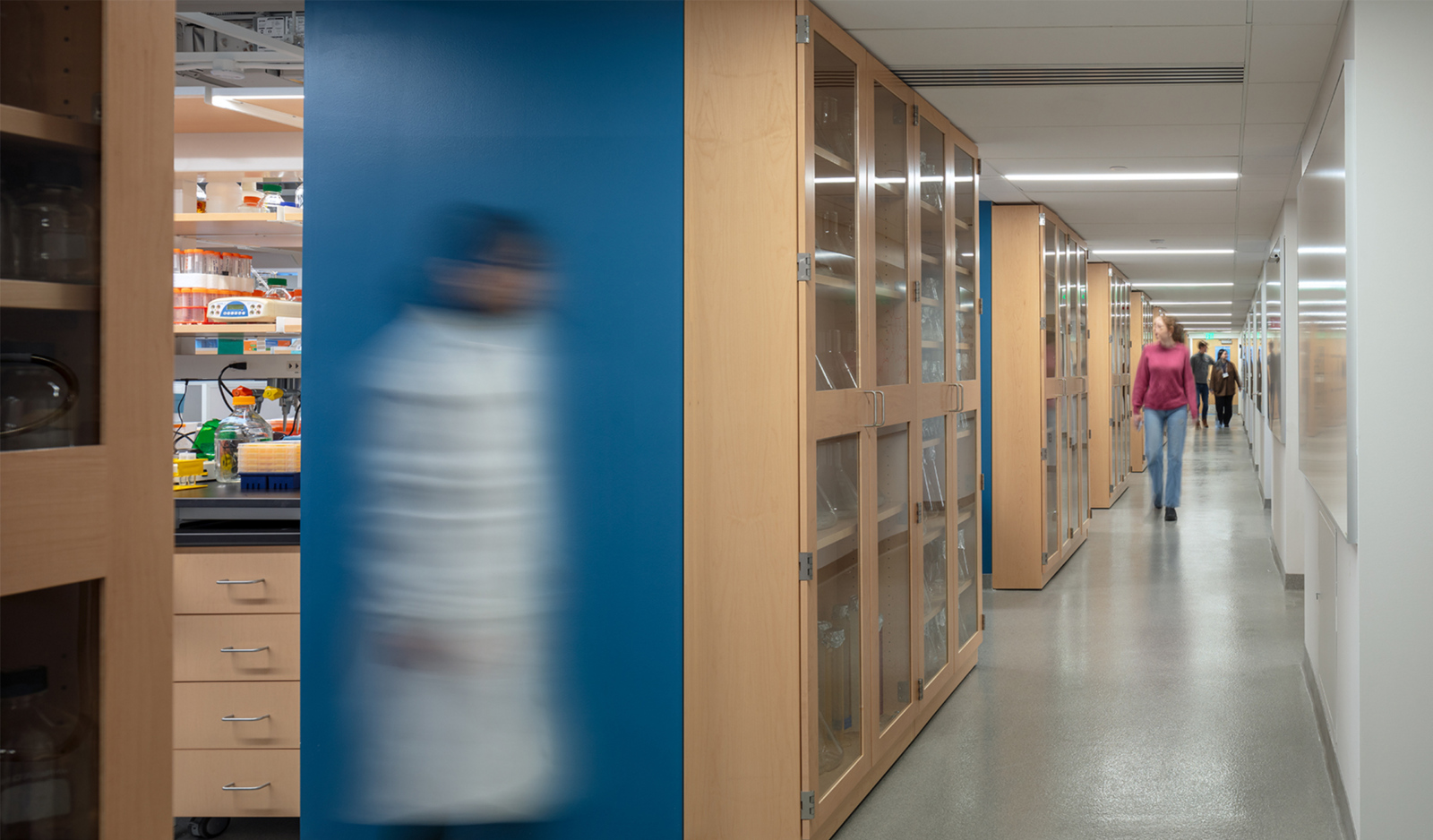
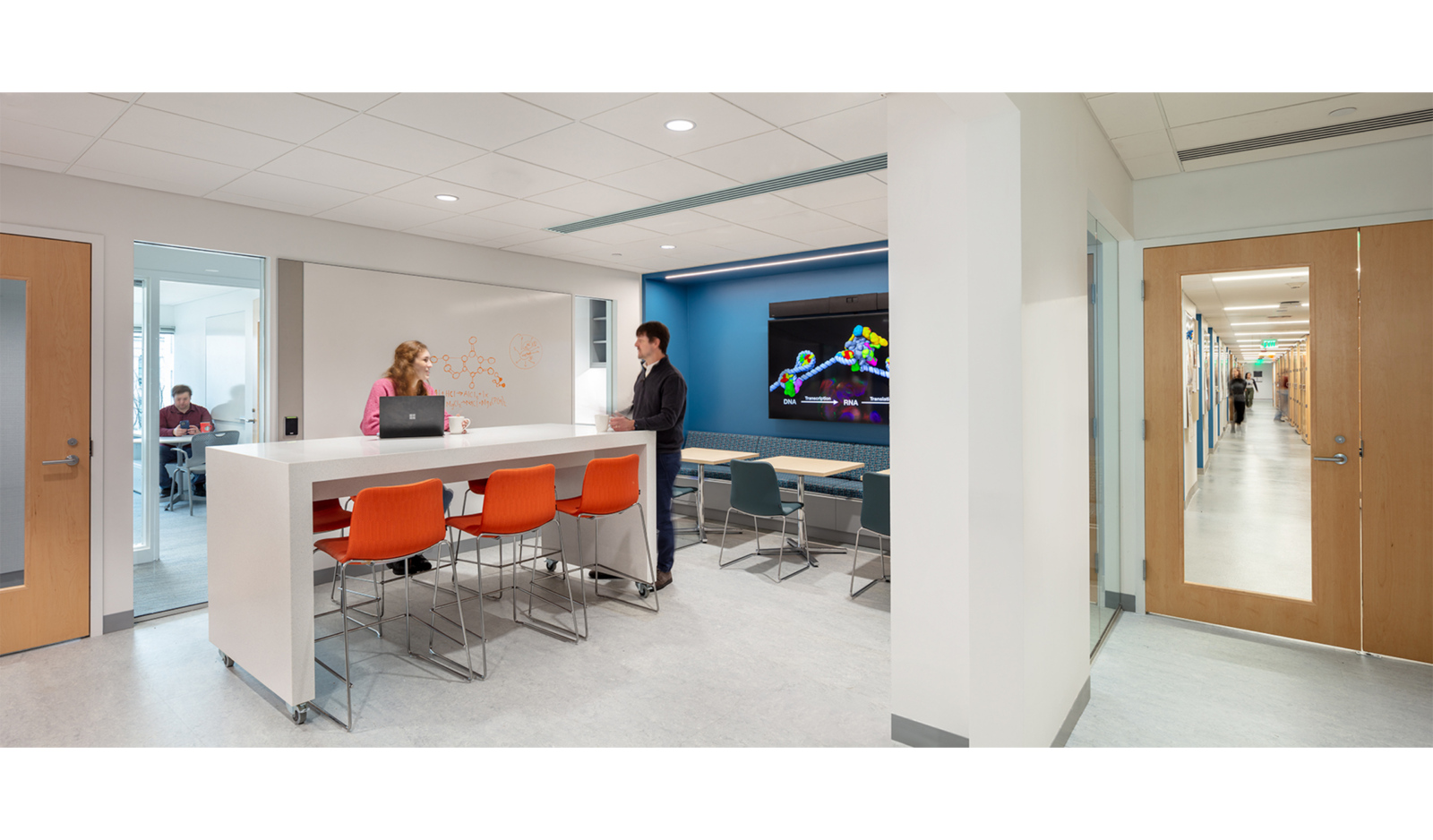
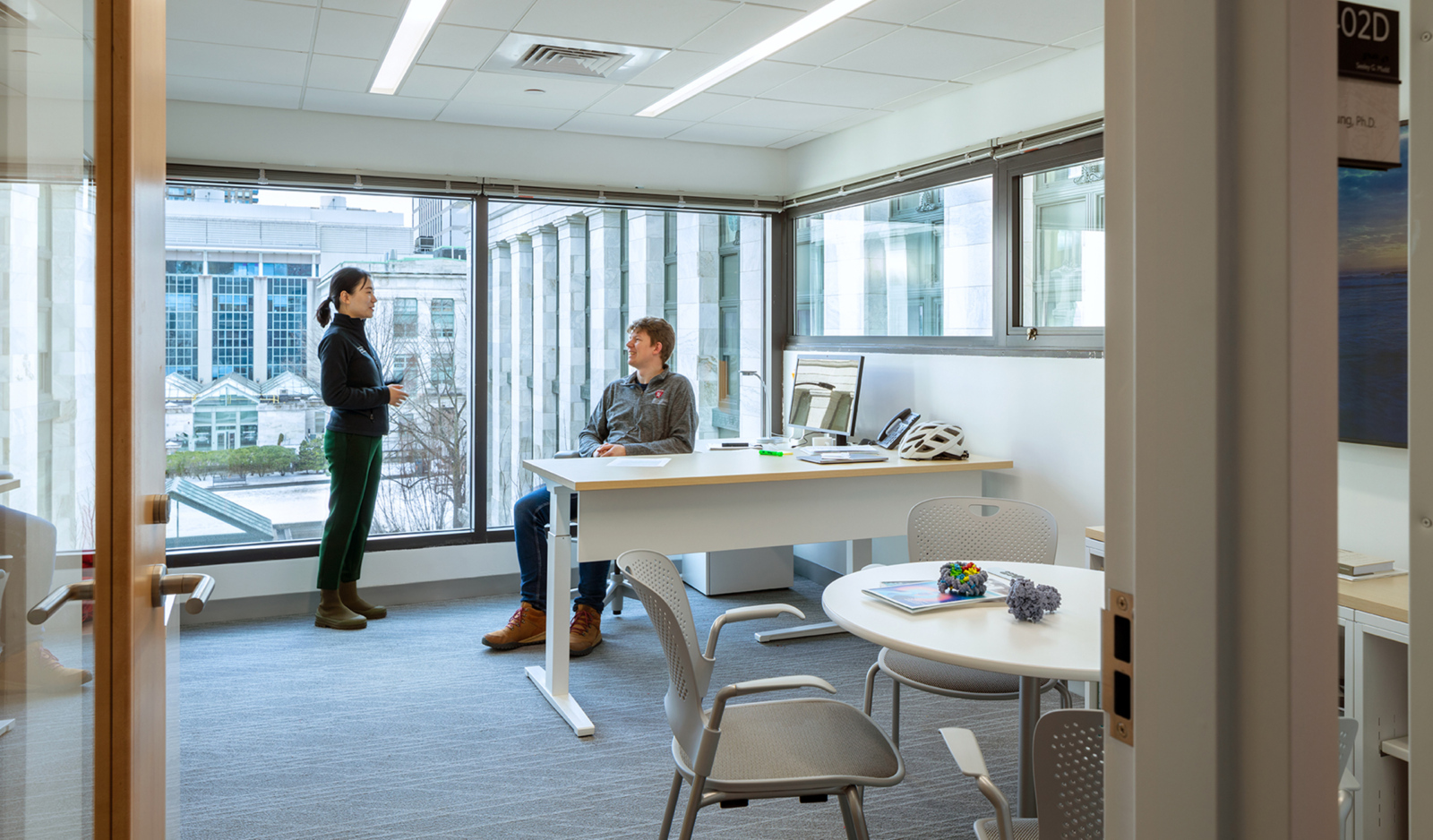
As part of Harvard Medical School’s West Quad Initiative, PAYETTE has completed several comprehensive phased renovations that provide much-needed flexible research space in the heart of the Medical School Quad for Cell Biology and Biological Chemistry and Molecular Pharmacology. Although each floor needed to address the unique needs of each program, the phased renovation was seen also as a complete building to bring cohesiveness to the end product. As part of these renovations, PAYETTE developed a new approach to flexible casework, complete with corresponding infrastructure, that enables future space modifications to easily support evolving research needs. The proposed casework system is seen as a benchmark strategy for future research lab renovations.
Gross Anatomy Lab & morgue renovation
The Gross Anatomy Lab and Morgue Renovation includes a general refresh of finishes, equipment replacement, lab safety improvements and accessibility upgrades to the existing labs. The Gross Anatomy Lab scope includes 6,850 SF of renovations to seven anatomy lab rooms, including new dissection table lighting, improved tool cleaning areas, accessibility improvements and laboratory safety improvements. The morgue scope includes 3,650 SF of comprehensive upgrades.
Blavatnik Harvard Life Lab programming & renovation
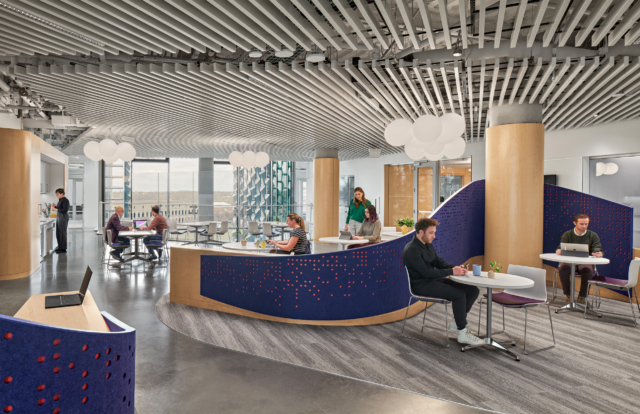
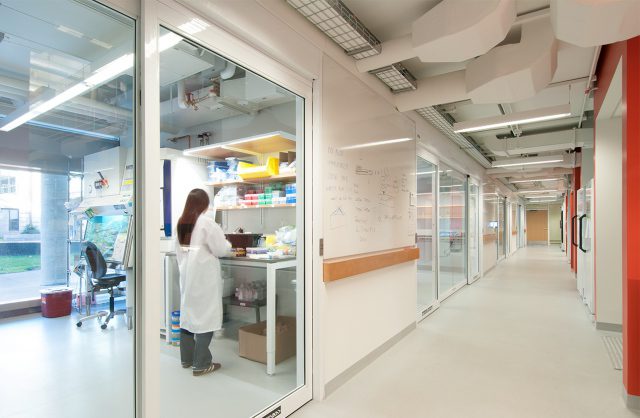
PAYETTE recently completed the Blavatnik Harvard Life Lab Longwood Research space. This new research and workspace supports Harvard’s new Therapeutics Initiative with a flexible research facility and a range of different work spaces. This incubator environment will accelerate ideas by integrating therapeutics from the earliest stage and supporting collaborative science across institutions and disciplines. Located adjacent to the primary circulation system on the first floor of Building C, the design provides multiple windows into the research and work space so that the broader Harvard Medical School community can view the activities occurring within. The flexible lab design provides space for multiple startup companies to begin their research. Bench spaces are assigned while a series of support spaces are shared amongst various groups. A separate work space was also part of the Life Lab project. The work space was designed intentionally with non assigned desks utilizing a hoteling methodology. A series of meeting spaces also provides space for companies to convene and develop their ideas. Shared amenities also include lounge space, concierge support desks and food areas. The design approach to the project provides a clear identity to the Life Lab spaces and links the lab space and work space together which exist on either side of an existing courtyard.
Multi Species Animal Research Spaces
PAYETTE has also recently completed multiple new animal research spaces. This series of renovations both meet their individual programmatic upgrades and gut renovations, but are also linked in a more holistic approach to phase upgrades to each of the facilities. The Goldenson project provides an entirely new space for gnotobiotic mice. The first of its kind at HMS dedicated to this mouse research modality, the new vivarium space dramatically increases research capabilities. In addition, the existing vivarium was comprehensively renovated to increase the capacity of the facility and replace critical supporting infrastructure. Similar upgrades are also underway in additional buildings to provide new procedure and behavior research spaces and upgrade the existing cagewash facility.